

When it comes to the construction and mining industries, hauling dump trucks play a pivotal role in transporting large volumes of materials. One of the crucial questions that often arise is: What is the maximum gradient a hauling dump truck can climb? As a leading supplier of Hauling Dump Truck, I am here to delve into this topic and provide you with a comprehensive understanding.
Factors Affecting the Maximum Climbing Gradient
The maximum gradient a hauling dump truck can climb is influenced by a multitude of factors. These factors interact with each other, and understanding them is essential for determining the truck's performance on inclined surfaces.
1. Engine Power
The engine is the heart of the hauling dump truck, and its power output is a primary determinant of the truck's climbing ability. A more powerful engine can generate greater torque, which is necessary to overcome the gravitational force and friction when climbing a slope. For instance, modern hauling dump trucks are equipped with high - performance diesel engines that can produce several hundred horsepower. The higher the horsepower, the more likely the truck can handle steeper gradients.
2. Weight and Load Distribution
The weight of the truck itself and the load it carries significantly impact its climbing capacity. A heavier truck requires more power to move up a slope. Moreover, proper load distribution is crucial. If the load is unevenly distributed, it can cause the truck to become unstable, especially on steep gradients. This instability not only reduces the maximum climbing gradient but also poses a safety risk. For example, if too much weight is concentrated at the rear of the truck, the front wheels may lose traction, making it difficult to steer and climb the slope.
3. Traction
Traction is the grip between the tires and the road surface. It is affected by the type of tires, the condition of the road, and the weather. Off - road hauling dump trucks typically use large, deep - treaded tires that are designed to provide better traction on uneven and slippery surfaces. In addition, the road surface condition, such as whether it is dry or wet, also plays a role. A wet or muddy road reduces the coefficient of friction, which in turn decreases the traction and the maximum climbing gradient.
4. Transmission System
The transmission system of a hauling dump truck allows the driver to select different gear ratios. In low gears, the engine can generate more torque, which is beneficial for climbing steep slopes. A well - designed transmission system enables smooth gear changes, ensuring that the truck can maintain the necessary power and speed while climbing. For example, some advanced hauling dump trucks are equipped with automatic transmissions that can adjust the gear ratio according to the load and the gradient of the slope.
Calculating the Maximum Climbing Gradient
The maximum climbing gradient of a hauling dump truck can be estimated using basic physical principles. The force required to move the truck up a slope is the sum of the gravitational force acting parallel to the slope and the frictional force.
The gravitational force acting parallel to the slope (F_g = mg\sin\theta), where (m) is the mass of the truck and its load, (g) is the acceleration due to gravity ((g = 9.81m/s^2)), and (\theta) is the angle of the slope. The frictional force (F_f=\mu N), where (\mu) is the coefficient of friction between the tires and the road surface and (N = mg\cos\theta) is the normal force.
The maximum force that the truck's engine can provide is limited by its power output. When the force required to climb the slope equals the maximum force that the engine can generate, the truck reaches its maximum climbing gradient.
In practical terms, manufacturers often provide the maximum climbing gradient specification for their trucks. For example, some medium - sized hauling dump trucks can climb gradients of up to 30% (which corresponds to an angle of approximately (16.7^{\circ})), while larger and more powerful trucks may be able to handle gradients of up to 40% ((21.8^{\circ})).
Real - World Applications
In construction sites and mines, the maximum climbing gradient of hauling dump trucks is a critical consideration. For example, in open - pit mines, the haul roads are often designed with a certain gradient to ensure efficient material transportation. If the trucks cannot climb the gradients of the haul roads, it will lead to inefficiencies and increased costs.
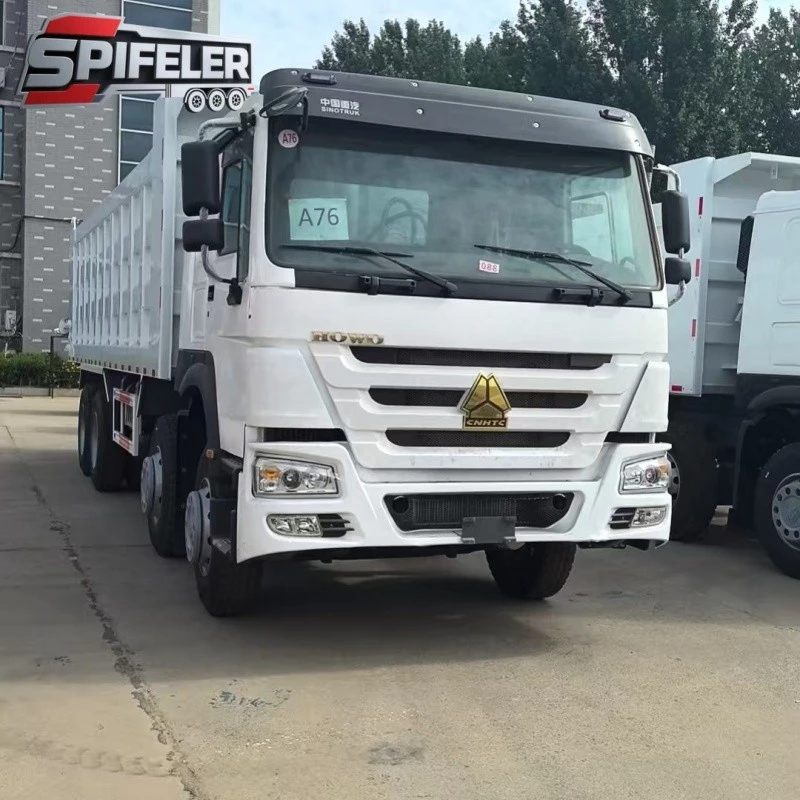
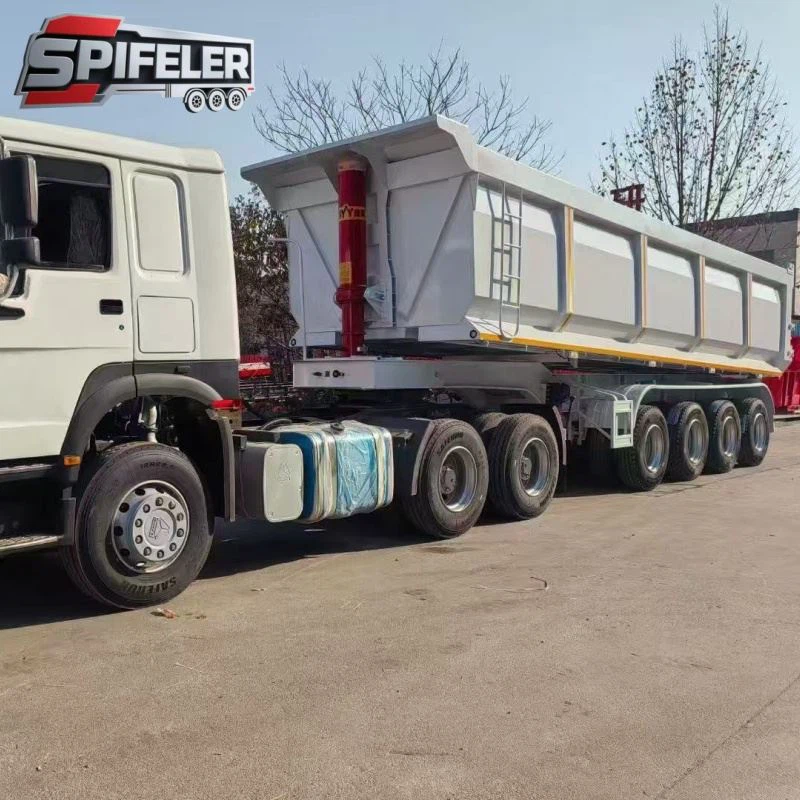
In mountainous construction projects, such as building roads or dams, hauling dump trucks need to be able to navigate steep slopes. The ability to climb high - gradient slopes allows these trucks to transport materials to hard - to - reach locations.
Our Hauling Dump Trucks
As a supplier of Hauling Dump Truck, we understand the importance of the maximum climbing gradient for our customers. Our trucks are designed and engineered to provide excellent climbing performance.
We use high - power engines that are capable of delivering sufficient torque to handle challenging slopes. The load distribution is carefully optimized to ensure stability, even on steep gradients. Our trucks are also equipped with high - traction tires and advanced transmission systems to enhance their climbing ability.
In addition to Hauling Dump Trucks, we also offer All - purpose Engineering Vehicle and Engineering Transport Dump Truck that are suitable for a wide range of engineering and construction applications.
Contact Us for Procurement
If you are in the market for a hauling dump truck or other engineering vehicles, we would be more than happy to assist you. Our team of experts can provide you with detailed information about our products, including their maximum climbing gradients and other performance specifications. We can also help you select the most suitable vehicle for your specific needs.
Do not hesitate to contact us for procurement and negotiation. We are committed to providing you with high - quality products and excellent customer service.
References
- Automotive Engineering Handbook, Society of Automotive Engineers
- Construction Equipment Technology, McGraw - Hill Education
- Mining Engineering Principles, SME Publications